
References
Hear what our customers say
First hand feedback from our customers and partners, sharing their experiences with our products and service. We have grouped the testimonials into the following categories and the following links will get you directly to your category of interest. Click on one of the 3 categories below that you are looking for.
Soil Resetting
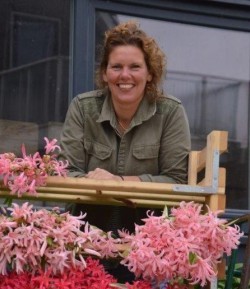
Kitty de Jong
We zijn tevreden met de resultaten van Bodem Resetten. De Nerines groeien goed en we hebben geen last van Pythium gehad. Het biologische grondontsmettingsproces heeft zijn werk goed gedaan.
Vincenzo Cavicchi
Marketing Director
CBC BIOGARD® Division Italy, Italy
Stringent EU regulations for achieving a sustainable pesticide use largely reduced and limited the use of chemical soil fumigants due to their very high-risk profile. For many years we have been searching for a sustainable and effective solution, with no impact on the environment and on human health, and that could be used also in organic production systems.
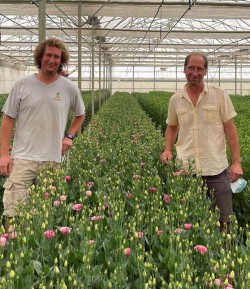
Thomas Ludwig
Lubexflor, Spain
Prof. dr. ir. ing. Gert Kema
Pierpaolo Monetti
Some years ago, BIOGARD®/SOILWISE® asked me to carry out trials with “Soil Resetting” and I gladly accepted their proposal, since I was looking for an organic product for soil disinfection.
2. supports weed control strategies (especially purslane)
3. constitutes effective biomass supply (my soils are sandy) and consequently improves the soil structure, texture, and organic substance content.
Yannick Smedts
Boomkwekerij Fleuren, The Netherlands
Apple Replant Disease (ARD) is a major problem in our cultivation of fruit trees. Replant disease is caused by a complex of fungi, but the exact mechanism remains a black box for the time being. As a result, we can only grow fruit trees on a plot once; after that we are forced to move to other plots.
We can return to our own trusted land, with existing infrastructure that allows us to work more efficiently and close by. Besides the improvement in quality, this is the biggest advantage for us.
Andrea Minuto
Tonnie Vink
Invasive Plant Control
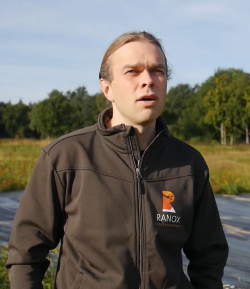
Johannes Regelink
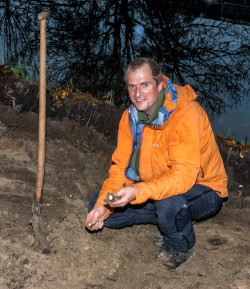
Pim Smit
The municipality of The Hague is one of the leading municipalities in the Netherlands in the control of Japanese knotweed.
SCIENTIFIC RESEARCH


CeRSAA, Italië (Centre for Research and Agricultural Assistance)
2016
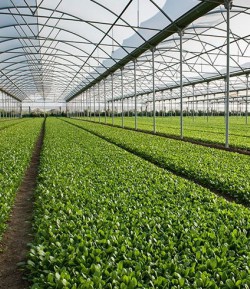
- After 3-4 weeks of treatment at a soil temperature of >25°C: 100% elimination of Verticillium, Sclerotinia, Phytophtora nicotianae and Fusarium oxysporum.
- At 15°C, the same result was obtained for Phytophtora nicotianae and Fusarium oxysporum. For Verticillium and Sclerotinia, the 100% elimination occurred only at the higher dose rates.

CeRSAA, Italië (Centre for Research and Agricultural Assistance)
2018
- The results of controlling Fusarium infections by Soil Resetting were similar to those of chemical fumigation and steaming.
- Yields in the reset plots were 10-20% higher (depending on crop and treatment) compared to chemical fumigation and steaming.

RANOX Groen Advies
2019
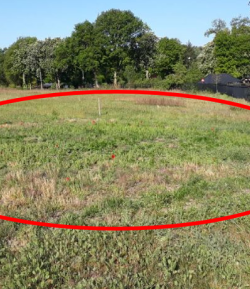
- On 2 of the 3 plots, 100% elimination of Japanese knotweed was achieved.
- On the third plot, some roots showed regrowth, which was the result of a leak in the plastic film that occurred during the treatment.

Wageningen University & Research (WUR)
2016-2017
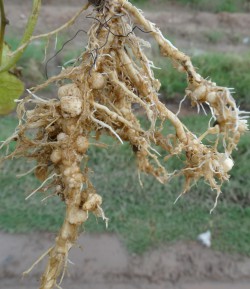
- In all cases, Metam Sodium had an efficacy of 80-90%. Soil Resetting gave better results in all treatment scenarios.
- Root knot nematode (Meloïdogyne chitwoodi): was no longer detectable after treatment with Soil Resetting
- Potato cyst nematode (Globodera spp): >99% elimination by Soil Resetting
- Stem nematode (Ditylenchus dipsaci): > 99% elimination by Soil Resetting
- Verticillium dahliae: > 99% eliminatie door Bodem Resetten
Wageningen University & Research (WUR)
2010
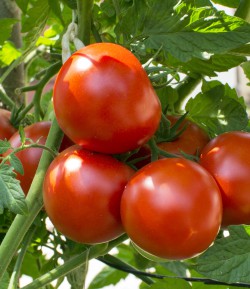
- Verticillium dahliae: > 98% elimination after 3 weeks and 100% after 4 weeks Soil Reset treatment
- Root-knot nematode (Meloïdogyne hapla): > 99% elimination
- Yields 9% above normal and fewer problems with Botrytis infestation.
Wageningen University & Research (WUR)
2018
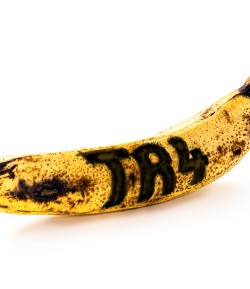
- Different treatments showed a 20x to 100x reduction of TR4 chlamydospores, depending on the treatment.
- 3 months after new planting, there were no infections of TR4. However, in one of the treated plots, where the plastic film was damaged during the treatment, an infection of TR4 was observed.